Articles and News
We are proud to have conceptualised and delivered a specialised training programme for the Verkhovna Rada of Ukraine, supporting the integration of gender equality into legislative and parliamentary processes. The programme, implemented in the framework of the GIZ programme “Strengthening Ukraine’s EU Alignment in the Rule of Law (3E4U)”, is being held from April to June 2026 for staff of the Ukrainian Parliamentary Research Service, the Secretariat, and Members of Parliament.
Across four modules, the training strengthens participants’ capacity to apply gender mainstreaming, use gender-disaggregated data, and conduct gender-legal expert review—ensuring that legislation is evidence-based, identifies structural inequalities, and prevents unintended discrimination.
Supporting the Integration of Gender Equality into legislative and parliamentary Processes

Inclusion amid crisis: Ensuring the rights of persons with disabilities in post-coup Myanmar
Nathalie Ebead’s 2025 article Inclusion amid crisis: Ensuring the rights of persons with disabilities in post-coup Myanmar builds on her earlier International IDEA publication Inclusion for Persons with Disabilities in Federal Democratic Myanmar: Strategies for Constitutional and Democratic Reform, developed with the Myanmar Coordination Initiative of Equal Rights for Persons with Disabilities (MCERP).
The work brought disability inclusion directly into analysis of Myanmar’s conflict-affected democratic transition, examining the participation and rights of persons with disabilities in interim institutions, constitutional reform and future federal democratic governance. To make the analysis more accessible, International IDEA also produced Easy-Read versions in English and Burmese, using simplified language and visuals to support participation by persons with disabilities in democratic and community processes.
Read the 2025 article: https://www.idea.int/news/inclusion-amid-crisis-ensuring-rights-persons-disabilities-post-coup-myanmar
Read Inclusion for Persons with Disabilities in Federal Democratic Myanmar: https://www.idea.int/publications/catalogue/inclusion-persons-disabilities-federal-democratic-myanmar-strategies
Download the Easy-Read version: https://www.idea.int/sites/default/files/2025-11/inclusion-strategies-for-people-with-disabilities-in-myanmar-easy-read.pdf
Read the Burmese Easy-Read version: https://www.idea.int/sites/default/files/publications/including-people-with-disabilities-in-myanmar-easy-read-my.pdf

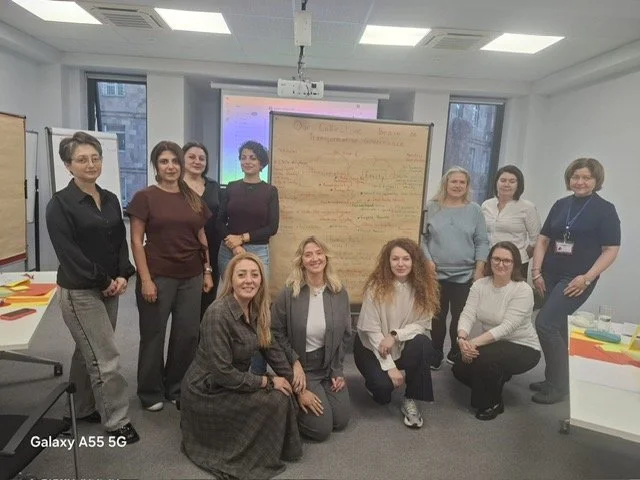
GIZ Armenia - where transformation begins with a shared vision and courage.
In November 2025, Nathalie Ebead co-facilitated the GIZ Transformation, Human Rights and Equity in Governance Workshop in Armenia, providing strategic guidance and facilitating visioning and planning across programmes from the Balkans, Eastern Europe, the South Caucasus and Central Asia.
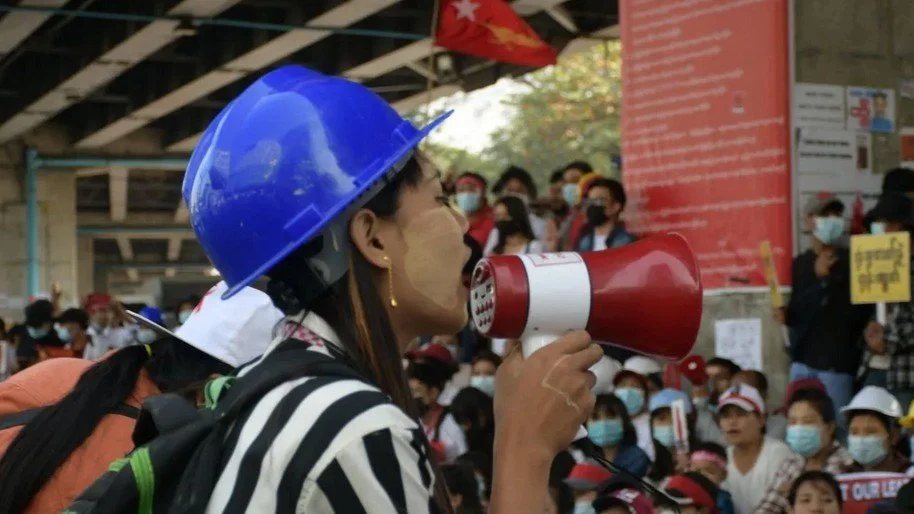
From protest to purpose: How Myanmar’s youth are shaping a democratic future
Article by Nathalie Ebead, International IDEA, August 2025. Explores the role of Myanmar’s youth in civic resistance, political learning and efforts to shape a future federal democratic system.
CRPH and International IDEA Myanmar discussed future cooperation between two sides for the Year 2023
January 11, 2023
Supporting Myanmar’s Democratic Institutions and Federal Democratic Transition
As Programme Manager for International IDEA’s Myanmar programme, Nathalie Ebead led programme support to democratic stakeholders working towards an inclusive federal democratic future, including interim and transitional institutions, elected representatives and civil society. In January 2023, International IDEA and the Committee Representing Pyidaungsu Hluttaw (CRPH) discussed priorities for cooperation and possible support to the CRPH’s work. International IDEA’s Myanmar programme provided constitutional and governance advice, capacity development, support for inclusive political participation and opportunities for international parliamentary engagement..

Myanmar’s first post-coup People’s Assembly decides on 30 per cent women’s quota
March 3, 2022
Article by Nathalie Ebead, March 2022
Written to complement Inclusion and Gender Equality in Post-Coup Myanmar: Strategies for Constitutional and Democratic Reform, the article examines the introduction of a 30 per cent women’s quota as an important development in women’s political representation and connects it to the wider challenges of gender equality, inclusion and democratic reform in post-coup Myanmar.
Read the publication: Inclusion and Gender Equality in Post-Coup Myanmar: Strategies for Constitutional and Democratic Reform

UN Global Compact on Migration – Human Rights of Migrants
2016 - 2018
Developing International IDEA’s Migration and Democracy Portfolio
As Head of Democracy Assessment, Analysis and Advisory at International IDEA, Nathalie Ebead developed the Institute’s work at the intersection of migration, political participation, citizenship, social cohesion and democracy. This included integrating migration into the first Global State of Democracy analysis (https://www.idea.int/gsod-2017/), contributing to international policy dialogue around the UN Global Compact for Migration, and developing comparative work on the political inclusion of migrants and refugees.
She also conceptualized and supervised the Robert Bosch Stiftung-funded Refugees, Asylum Seekers and Democracy project (https://www.idea.int/events/how-are-refugees-and-asylum-seekers-engaging-political-life-their-host-and-origin-countries). International IDEA’s project examined the formal and non-formal political participation of refugees in both host countries and countries of origin and produced the comparative report Political Participation of Refugees: Bridging the Gaps, based on case studies across eight host countries and five major refugee-origin communities.
This portfolio also informed International IDEA’s engagement in the international debate on migration governance, including the developing Global Compact for Safe, Orderly and Regular Migration and wider discussions on migrants’ political participation, inclusion and human rights. https://www.idea.int/events/workshop-sdgs-and-migration
Read: Political Participation of Refugees: Bridging the Gaps and explore the case studies → https://www.idea.int/publications/catalogue/political-participation-refugees-bridging-gaps
Read: Migration, social polarization, citizenship and multiculturalism: https://www.idea.int/gsod-2017/files/IDEA-GSOD-2017-CHAPTER-7-EN.pdf
See how International IDEA continues its work on migration and democracy: https://www.idea.int/publications/catalogue/html/global-state-democracy-2025-democracy-move

10 ways to create more inclusive cities for refugees – innovations from Sweden, Kenya and Uganda
July 5, 2017
Migration, Democracy and Inclusive Cities. As Head of Democracy Assessment, Analysis and Advisory at International IDEA, Nathalie Ebead developed the Institute’s work on the relationship between migration, political inclusion and democratic resilience. In July 2017, she represented International IDEA as a panelist at the Almedalen discussion “Inclusive Cities for Refugees”, addressing practical ways to strengthen refugee inclusion and overcome barriers to political participation.

The Global State of Democracy: Exploring Democracy’s Resilience
November 15, 2017
Global State of Democracy – From Concept to Global Flagship
Conceptual leadership | Global analysis | Democracy indices | Author | Public engagement
As the first Head of Democracy Assessment, Analysis and Advisory at International IDEA, Nathalie Ebead conceptualized and led the development of the first edition of the Global State of Democracy and led the conceptual design of the Global State of Democracy Indices together with an international group of experts.
She also co-authored the first edition’s chapter “Migration, social polarization, citizenship and multiculturalism,” examining how migration, citizenship, political inclusion and multiculturalism affect democratic resilience.
At the launch of the first edition in November 2017, she was interviewed by The Guardian on the report’s findings and emerging challenges to democracy, helping position the new Global State of Democracy initiative in the international public debate.
The initiative has since developed into International IDEA’s recurring flagship Global State of Democracy Report. The latest edition—The Global State of Democracy 2026: Democracy in an Age of Conflict—was launched in September 2026 as the eighth edition of the series.
Explore the first Global State of Democracy report: First edition: Exploring Democracy's Resilience
Read Nathalie Ebead’s chapter: Migration, social polarization, citizenship and multiculturalism
Read the Guardian interview: The Guardian coverage of the 2017 launch
Explore the latest Global State of Democracy report: Global State of Democracy 2026: Democracy in an Age of Conflict
